
To celebrate Weekly Shonen Jump‘s 25th anniversary, Shueisha decided to create a new style event to promote it’s history for the fans. The name of the event was called “Weekly Jump Multi World” and was a exhibition that was held in the Tokyo Dome Prism Hall between July 28th through August 15th, 1993. The event cost 700 yen for admission and guests were able to receive as special booklet which highlighted some of the items on display. The booklet was never available for sale directly. Over 48 authors provided new illustrations and congratulatory messages for this anniversary and are documented in this booklet and this is one of them. To help provide context to this profile that was captured in 1993, we have included some additional information to supplement the transcription and rough English translation.
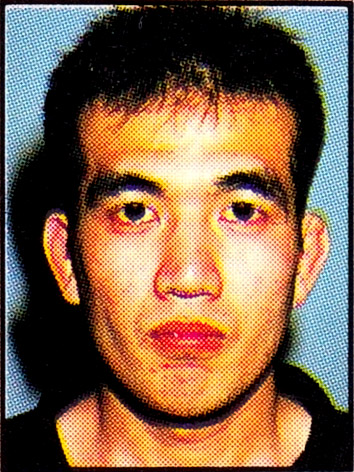
| Name | Takashi Noguchi (野口賢) |
| Date of Birth | September 6, 1964 |
| Birthplace | Chiba Prefecture |
| Blood Type | O |
| Debut Work | “Rieka” in 1991 ’91年『リエカ』 |
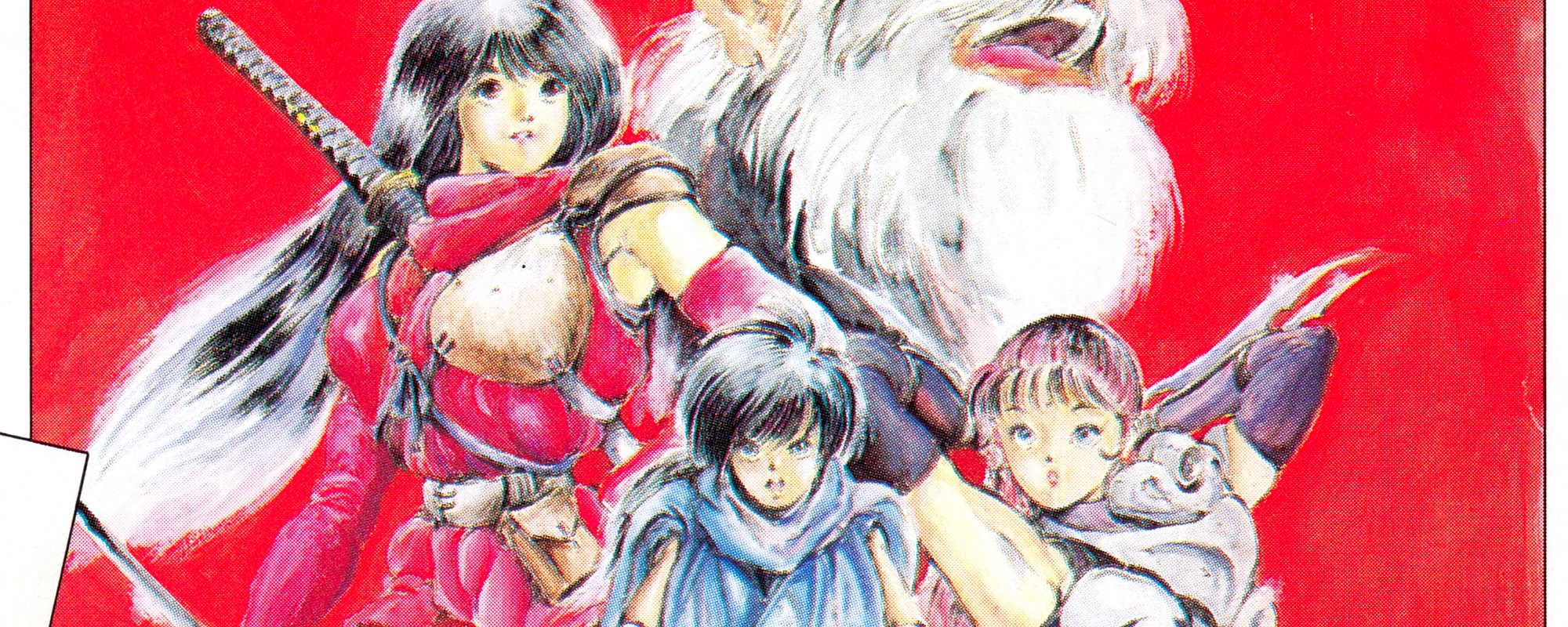
| 1st Jump Serialization | “Yagyu Reppuken Renya” 『柳生烈風剣連也』 |
| Additional Info | V-Jump titles like “Final Fantasy V: Bartz & Boko The Chapter of Departure” Vジャンプ誌上で『ファイナルファンタジーV~バッツ&ボコ 旅立ちの章~』などを発表。 |
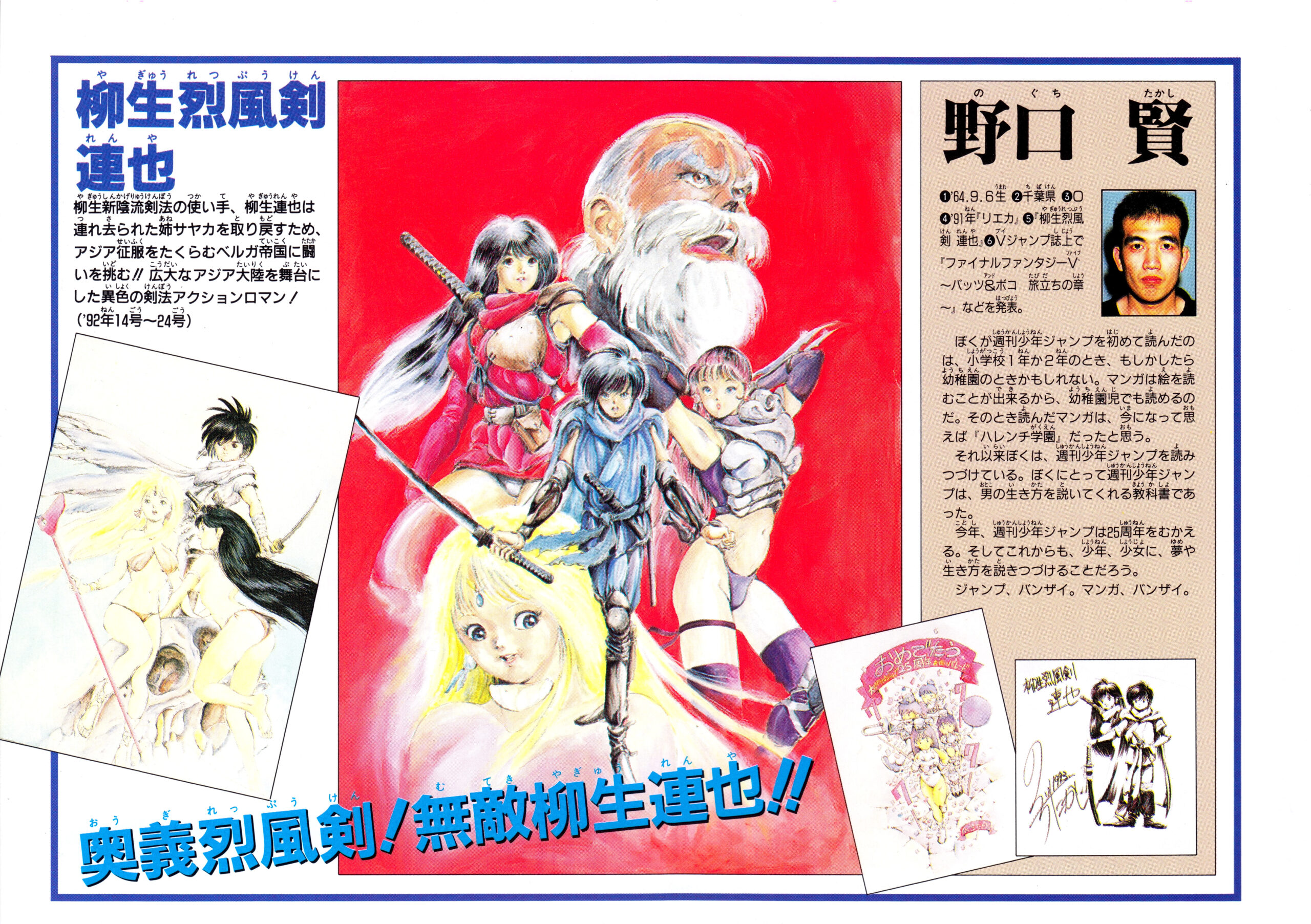
To celebrate Weekly Shonen Jump‘s 25th anniversary, Takashi Noguchi provided this shikishi and illustration:
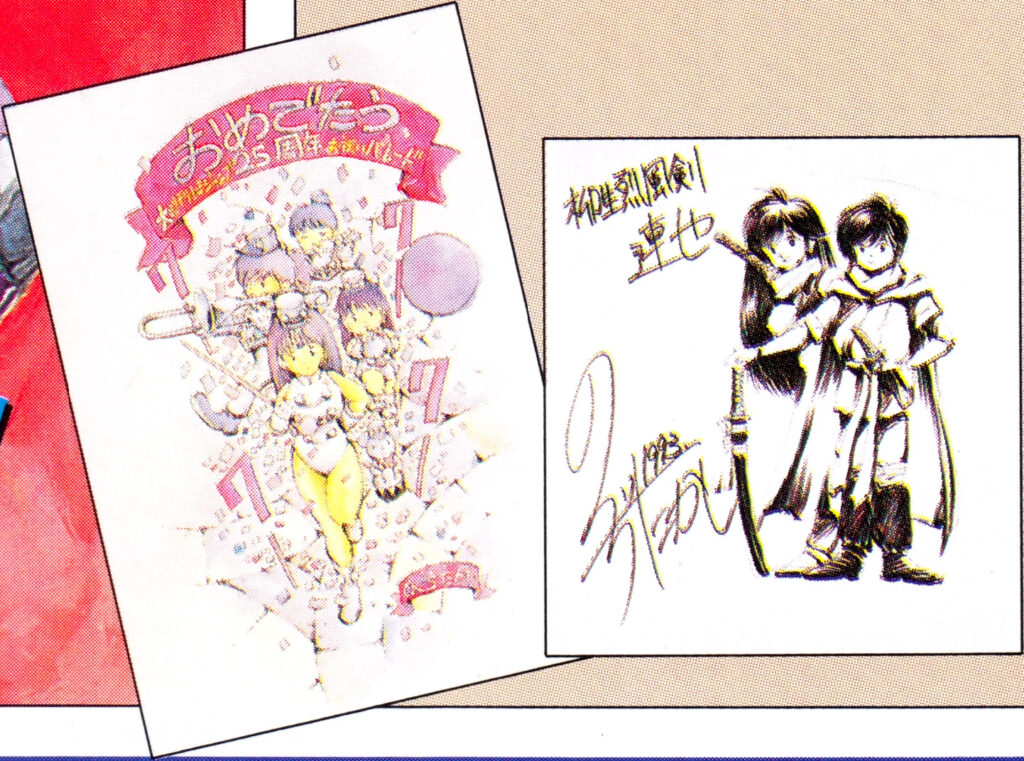
He also provided this comment as well (which has been roughly translated into English):
ぼくが週刊少年ジャンプを初めて読んだのは、小学校1年か2年のとき、もしかしたら幼稚園のときかもしれない。マンガは絵を読むことが出来るから、幼稚園児でも読めるのだ。そのとき読んだマンガは、今になって思えば『ハレンチ学園』だったと思う。
それ以来ぼくは、週刊少年ジャンプを読みつづけている。ぼくにとって週刊少年ジャンプは、男の生き方を説いてくれる教科書であった。
今年、週刊少年ジャンプは25周年をむかえる。そしてこれからも、少年、少女に、夢や生き方を説きつづけることだろう。
ジャンプ、バンザイ。マンガ、バンザイ。
I first read Weekly Shonen Jump back in 1st or 2nd grade of elementary school, maybe even in kindergarten. Since manga includes pictures, even kindergartners can enjoy it. Thinking back, I probably was reading “Harenchi Gakuen” then.
Since then, I’ve never stopped reading Weekly Shonen Jump. It is a textbook on how to grow up to be a man.
This year is Weekly Shonen Jump’s 25th anniversary. And to this day it continues to teach both boys and girls about dreams and life.
Jump Banzai. Manga Banzai.
The article ends with a highlight of his only manga serialization at the time, Yagyu Reppuken Renya, which started with issue 14 of Weekly Shonen Jump in 1992 and concluded with issue 24 for a total of 10 chapters.
The following is some additional context and information not included in the article:
Takashi Noguchi’s debut manga was Rieka (リエカ) which was published the Weekly Shonen Jump Spring Special in 1991. For the author comment he provided this message (which has been roughly translated into English):
きつい〆切りで、迫当さんにつつかれながら、なんとか65P指ききりました!! 初掲載であせり緊張の連続!! 感想聞かせてください!!
Under a tight deadline and supervision of Sakoto-san, I somehow completed 65 pages!! It was constant anxiety and nerves for my first publication!! Please let me know your thoughts!!
Following this oneshot was his immediate serialization into Weekly Shonen Jump magazine with Yagyu Reppuken Renya.
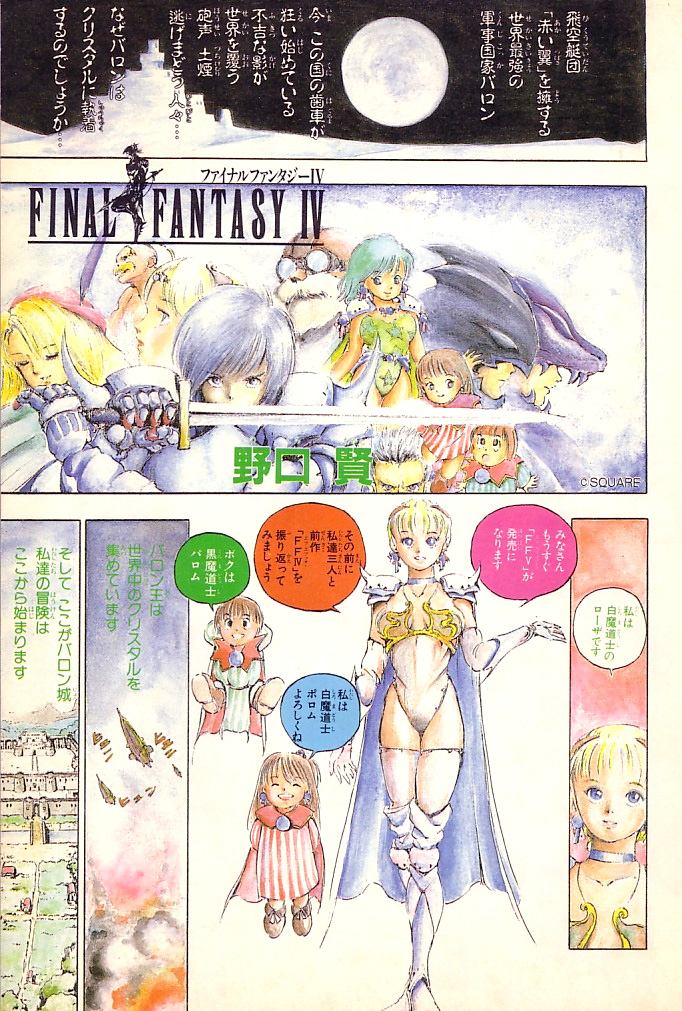
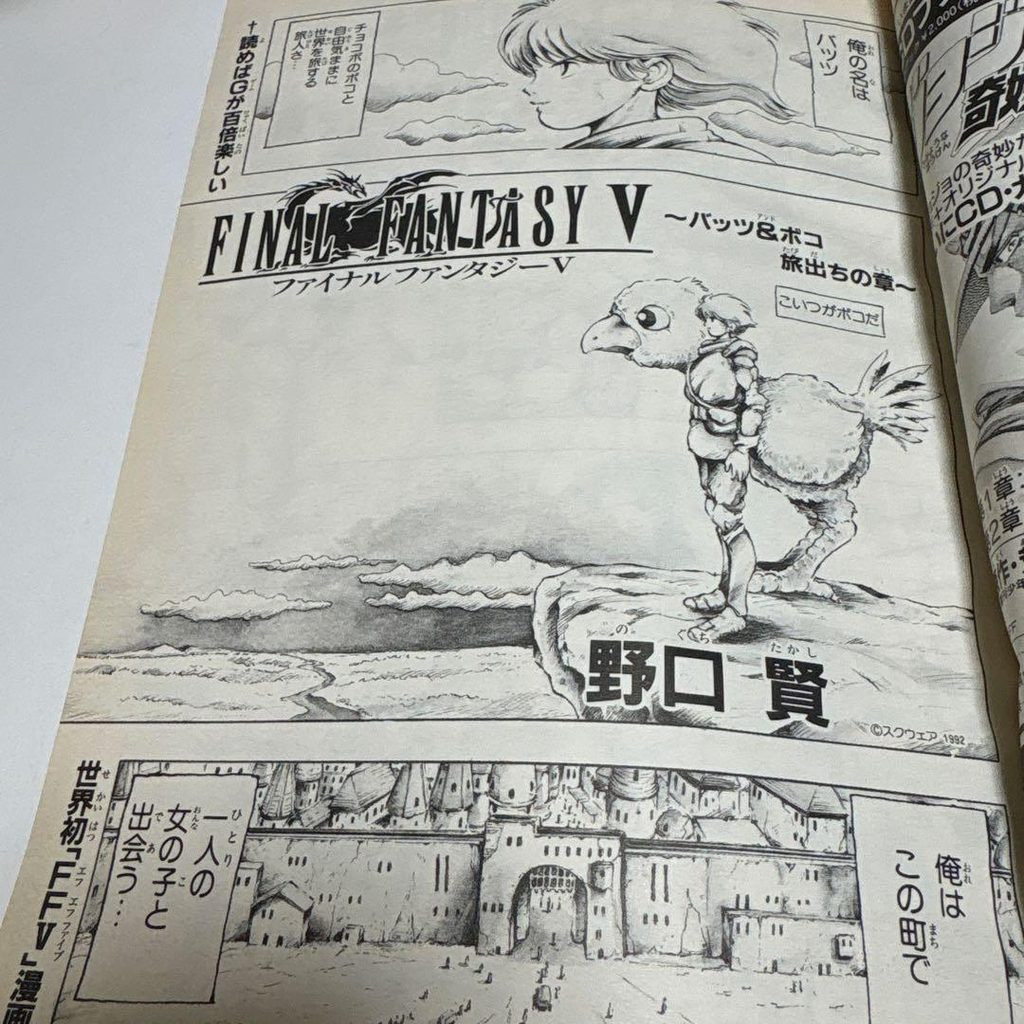
He had then had a series of oneshots published in the V-Jump magazine. The first was in the November 1992 issue with the title of Final Fantasy IV (ファイナル・ファンタジーIV). The 9 page manga was in full color and highlighted various scenes from the videogame, rather than telling a single story. Then in the December 1992 issue, he published Final Fantasy V: Bartz & Boko The Chapter of Departure (ファイナルファンタジーV~バッツ&ボコ 旅立ちの章~).
Until the Jump Multi World event in 1993, he did not have any other manga series or oneshots published. It wasn’t until 1995 he would return to Weekly Shonen Jump with Ryudo no Shigu (竜童のシグ) that ran for 13 chapters between issues 24 and 36-37. Then he would return one last time to the magazine with Be Takuto!! Yaban Nare (BE TAKUTO~野蛮なれ~) in 1996 that ran between issue 50 in 1996 through issue 19 in 1997 for a total of 20 chapters. Following this, he would later move into Shueisha’s Super Jump magazine for a series of more successful manga serialization starting in 1999.