

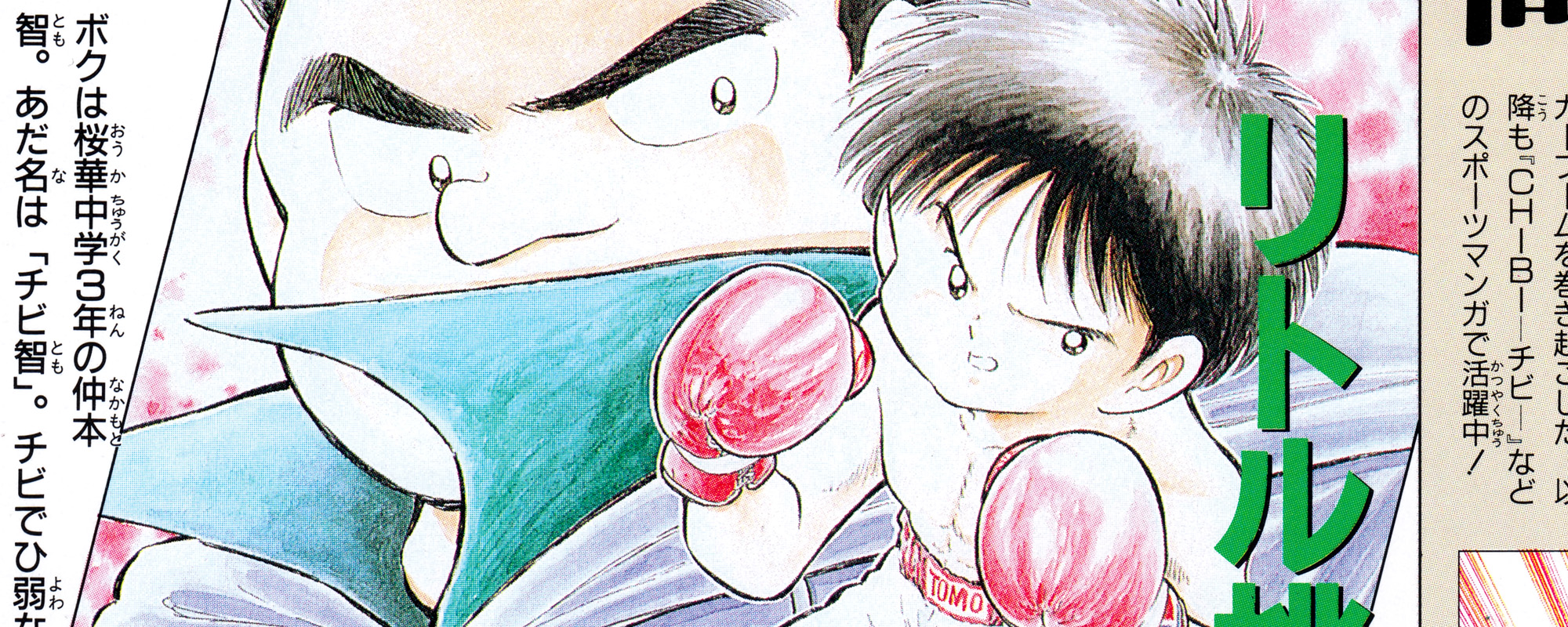
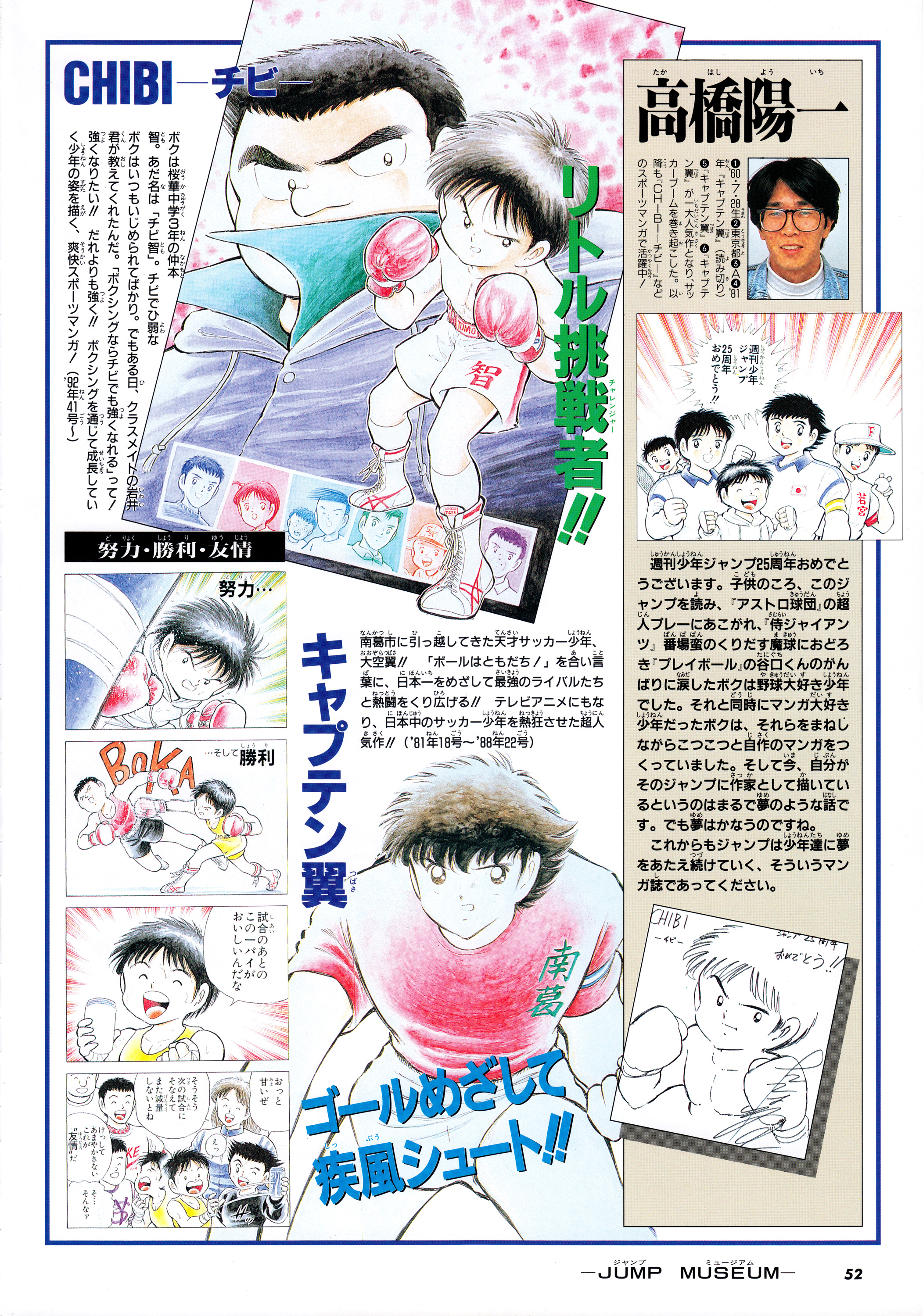
To celebrate Weekly Shonen Jump‘s 25th anniversary, Shueisha decided to create a new style event to promote it’s history for the fans. The name of the event was called “Weekly Jump Multi World” and was a exhibition that was held in the Tokyo Dome Prism Hall between July 28th through August 15th, 1993. The event cost 700 yen for admission and guests were able to receive as special booklet which highlighted some of the items on display. The booklet was never available for sale directly. Over 48 authors provided new illustrations and congratulatory messages for this anniversary and are documented in this booklet and this is one of them. To help provide context to this profile that was captured in 1993, we have included some additional information to supplement the transcription and rough English translation.
| Name | Yoichi Takahashi (高橋 陽一) |
| Date of Birth | July 28, 1960 |
| Birthplace | Tokyo |
| Blood Type | A |
| Debut Work | “Captain Tsubasa” (oneshot) in 1981 ’81年『キャプテン翼』(読み切り) |
| 1st Jump Serialization | “Captain Tsubasa” 『キャプテン翼』 |
| Additional Info | The hit “Captain Tsubasa” series help create a soccer boom. Since then, he’s created a new sports manga such as “CHIBI”! 『キャプテン翼』が一大人気作となり、サッカーブームを巻き起こした。 以降も『CHIBI-チビ-』などのスポーツマンガで活躍中! |
To celebrate Weekly Shonen Jump‘s 25th anniversary, Yoichi Takahashi provided this illustration and comment, which have been roughly translated below:
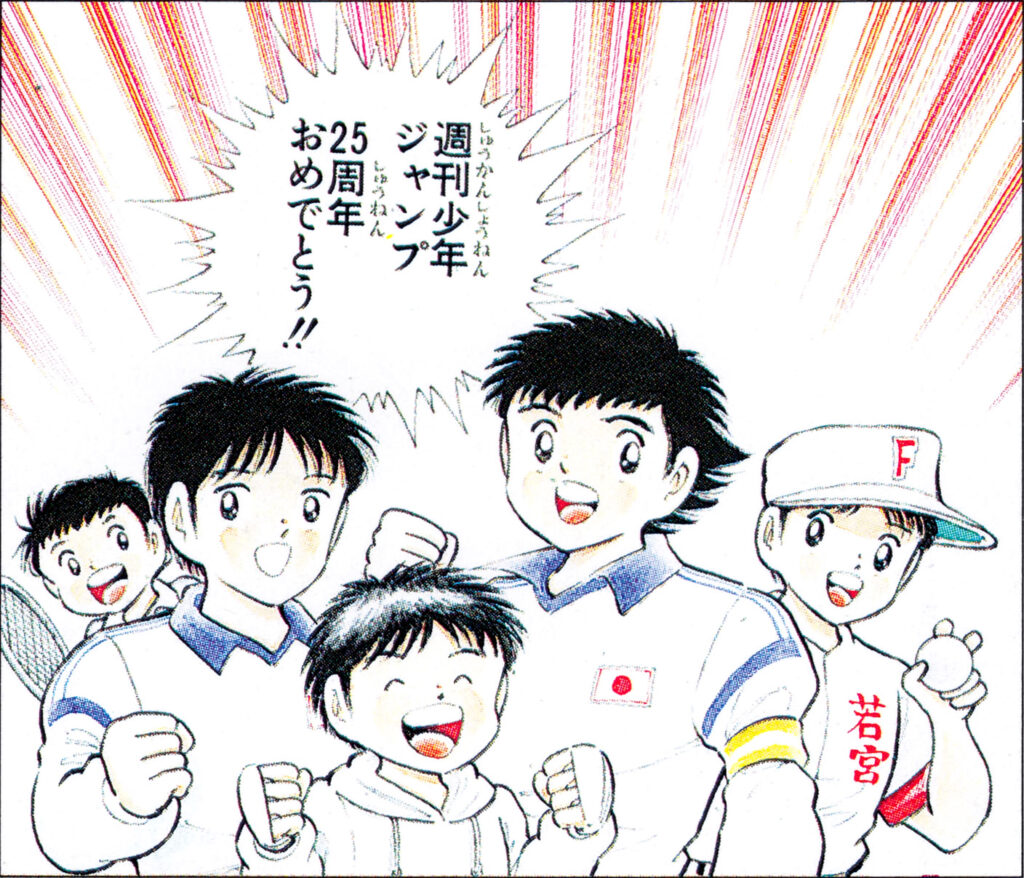
週刊少年ジャンプ25周年おめでとう!!
Happy 25th anniversary to Weekly Shonen Jump!!
週刊少年ジャンプ25周年おめでとうございます。子供のころ、このジャンプを読み、『アストロ球団』の超人プレーにあこがれ、『侍ジャイアンツ』番場蛮のくりだす魔球におどろき『プレイボール』の谷口くんのがんばりに涙したボクは野球大好き少年でした。それと同時にマンガ大好き少年だったボクは、それらをまねしながらこつこつと自作のマンガをつくっていました。そして今、自分がそのジャンプに作家として描いているというのはまるで夢のような話です。でも夢はかなうのですね。
これからもジャンプは少年達に夢をあたえ続けていく、そういうマンガ誌であってください。
Congratulations on the 25th anniversary of Weekly Shonen Jump. As a child, I read Jump and was a big fan of baseball, so I admired the superhuman plays in “Astro Kyudan”, being amazed by Banba Ban’s magic pitch in “Samurai Giants”, and cried with Taniguchi’s struggles in “Play Ball”. During that time, I loved manga too, and tried to imitate those characters while learning to draw my own manga. And now, I’m living that dream as an artist for Jump. Your dreams can become true.
I wish for Jump to continue and be a manga magazine that gives new dreams to children.
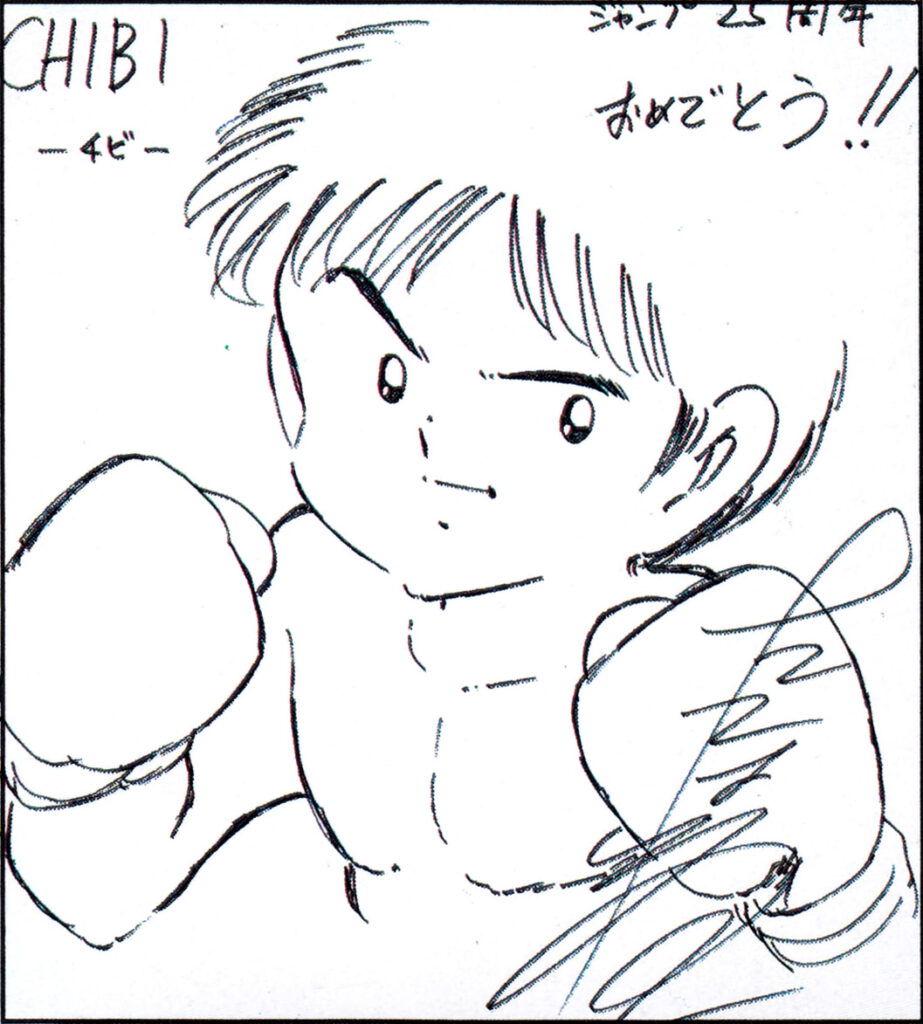
He also provided this shikishi for the event based on his current series at the time CHIBI:
The article ends with a 4-panel manga titled “Effort, Victory, Friendship” (努力・勝利・友情) which was enlarged and shown on display at the Jump Multi World event in 1993. A rough English translation of the manga is included below:
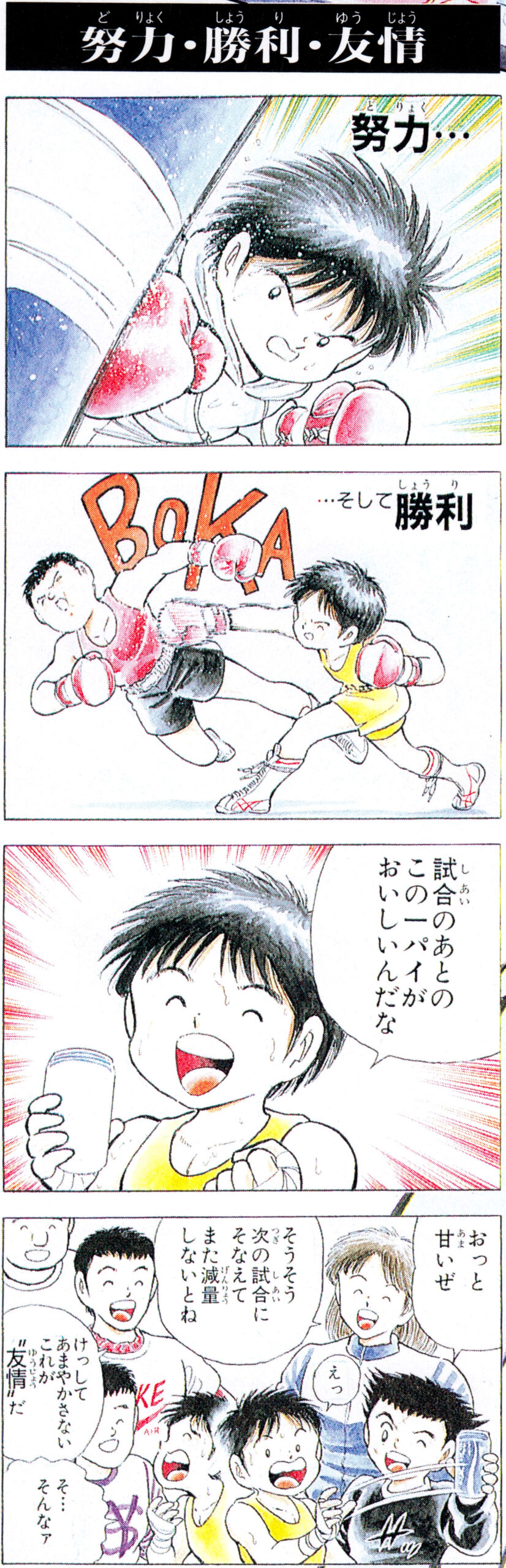
Panel 1:
“Effort…”
Panel 2:
“…leads to Victory”
Panel 3:
“This always tastes the best after a good match.”
Panel 4:
“Oops, no sweets.”
“Huh?”
“You know you need to lose weight before the next match.”
“Even with our ‘Friendship’ you still won’t get pampered.”
“No… no fair.”
The remaining sections of article then provide a brief summary for the CHIBI and Captain Tsubasa manga series.
The following is some additional context and information not included in the article.
The Captain Tsubasa (キャプテン翼) oneshot originally was published in issue 18 in Weekly Shonen Jump in 1980, and the article lists this information incorrectly as in 1981. The full serialization did start exactly one year later in 1981 with the same issue number, which may have caused the error. On April 5, 2024, the entire original manga series was added to Manga Plus in English. This English edition, similar to various Japanese editions, combines the previous chapters into a total of 113 chapters. When the series ran in Weekly Shonen Jump in Japan it had 356 chapters and concluded in issue 22 in 1988.
The Captain Tsubasa manga series would go on to have various sequels and continuations, including a 5-chapter special run in 1993 between issues 15 and 19. it would later return in 1994 through 1997 with Captain Tsubasa: World Youth (キャプテン翼 ワールドユース編). Future sequels and continuations would later bounce between various other Shueisha-owned magazines.
Two other series not mentioned in the article were Sho no Densetsu (翔の伝説) and Ace! (エース!). The Sho no Densetsu followed the Captain Tsubasa serialization and started in issue 39 in 1988. It would only run for 25 chapters being ending in issue 13 in Weekly Shonen Jump in 1989. Ace! would be the serialization that followed it, which started in Issue 1-2 in 1990. The series would run for 73 chapters and end in issue 26 in 1991.
Chibi (CHIBI-チビ-) started its serialization in issue 41 in Weekly Shonen Jump in 1992. While it was still running through most of the anniversary year, the series did conclude in issue 45 in 1993 for a total of 54 chapters. There was no hiatus for this new manga series while the special 5-chapter run of Captain Tsubasa occurred in those same issues in 1993.
Astro Kyudan (アストロ球団), or “Team Astro” was a manga by Shiro Tozaki (story) (遠崎史朗) and Norihiro Nakajima (art) (中島徳博) that ran in Weekly Shonen Jump starting in issue 39 in 1972 and ending in issue 26 in 1976. The series would run for a total of 183 chapters.
Samurai Giants (侍ジャイアンツ) was a manga by Ikki Kajiwara (story) (梶原一騎) and Ko Inoue (art) (井上コオ) that ran in Weekly Shonen Jump starting in issue 36 in 1971 and ending in issue 42 in 1974. The series would run for a total of 150 chapters.
Play Ball (プレイボール) was a manga by Akio Chiba (ちばあきお) that ran in Weekly Shonen Jump starting in issue 27 in 1973 and ending in issue 31 in 1978. The series would run for 201 chapters.
The 4-panel manga appears to have been edited to remove the branding for “Pocari Sweat” that was on the bottle. In the 4th panel you can still see the iconic blue and white design being used. The original drawing was likely on display at the event unedited, but required the change for the printed booklet. In the Captain Tsubasa manga for example, there was frequent use of real brands and logos used which would have required permission in order to be used for licensed printed materials.


