

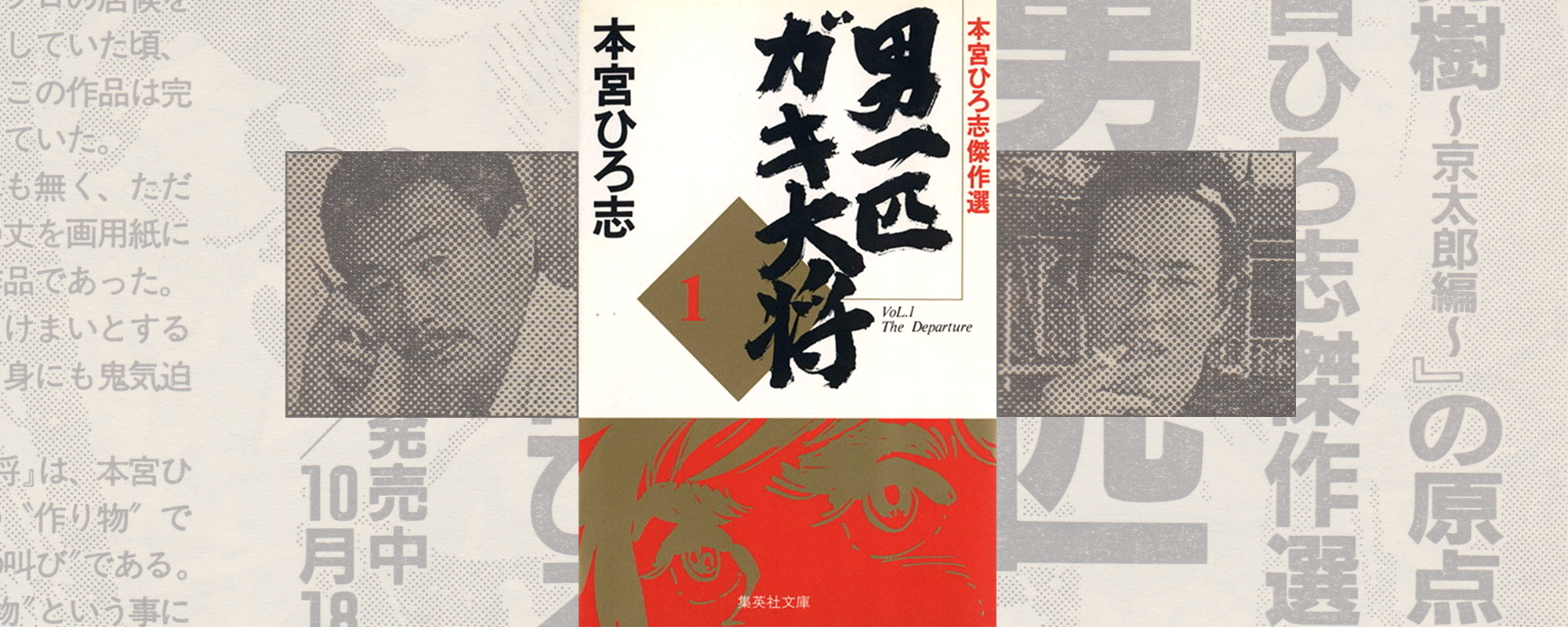
In the second issue of Shueisha’s magazine Monthly Manga Allman, there was an ad for the upcoming “Bunko” edition of the Otoko Ippiki Gaki Daisho (男一匹ガキ大将) manga series. This re-release of the series condensed the series from it’s original 20 volume run, down to just 7 new volumes, with a removal of the later part of the series. The magazine issue came out on October 6, 1995 in Japan.
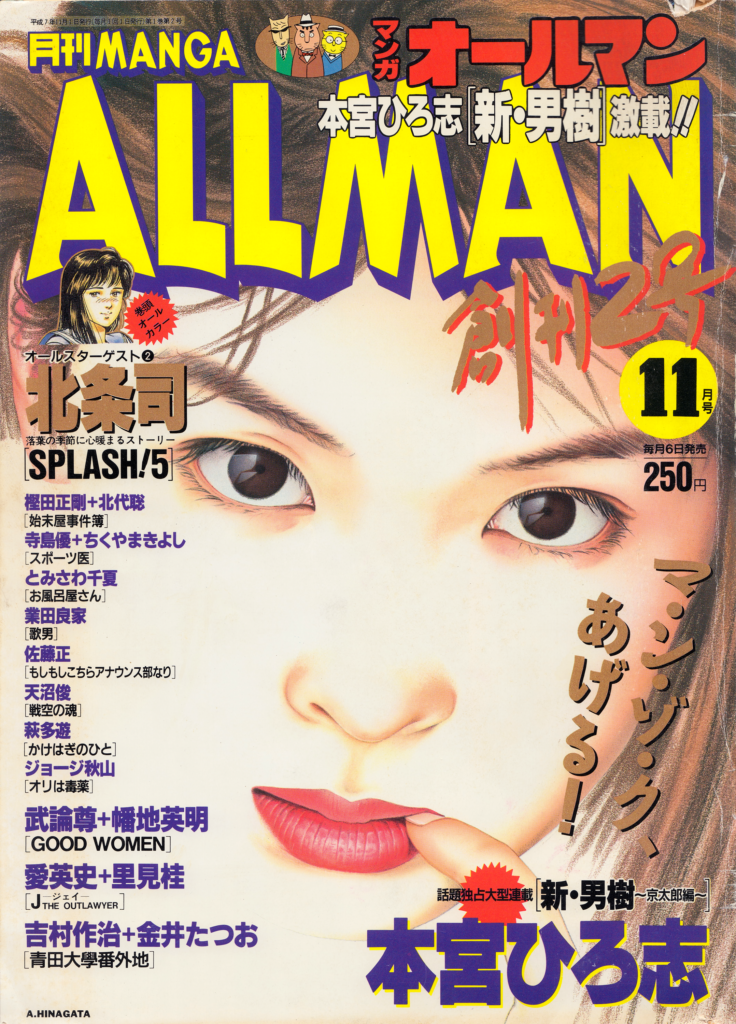
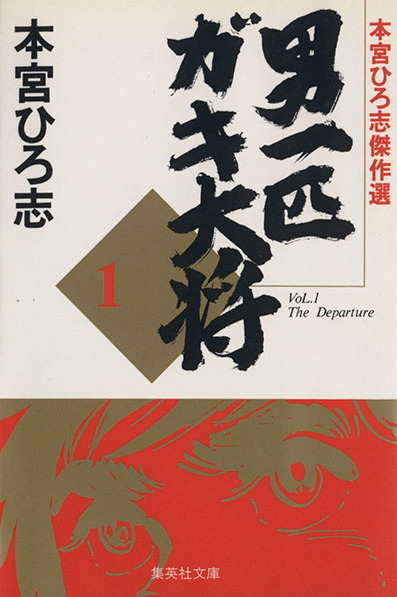
The series was created by Hiroshi Motomiya (本宮ひろ志) and it premiered in Weekly Shonen Jump 11th issue when the magazine started in 1968. This was one of 2 new serializations that started in the magazine with that issue, alongside Harenchi Gakuen (ハレンチ学園) by Go Nagai. Otoko Ippiki Gaki Daisho would run for 158 chapters and conclude in 1973. The series is considered one of the magazine’s first big successes. It received an anime adaptation in 1969, which was the first anime adaptation of a Weekly Shonen Jump manga series. The series was about the the main character Mankichi Togawa as he aims to be the number one high school gang leader in Japan.
The ad, which is shown below, talked to two creators in the Monthly Manga Allman magazine about their thoughts on the Otoko Ippiki Gaki Daisho series. The magazine was targeted towards older men, which in 1995 would have grown up when the series was originally published. Buronson (武論尊) was currently writing for the manga series Good Women, but the short series would end the following issue and never be reprinted. Tatsuo Kanai (金井たつお) was the artist on Aotadaigaku Bangaichi (青田大学番外地) manga series with the story by Sakuji Yoshimura (吉村作治). Hiroshi Motomiya, who originally created Otoko Ippiki Gaki Daisho was also publishing a series in Monthly Manga Allman, titled Shin-Otokogi (新・男樹). This was a sequel to the Otokogi that ran in Shogakukan’s Big Comic magazine in 1979. He was also consecutively working on the manga serie Salary Man Kintaro (サラリーマン金太郎) in Weekly Young Jump.
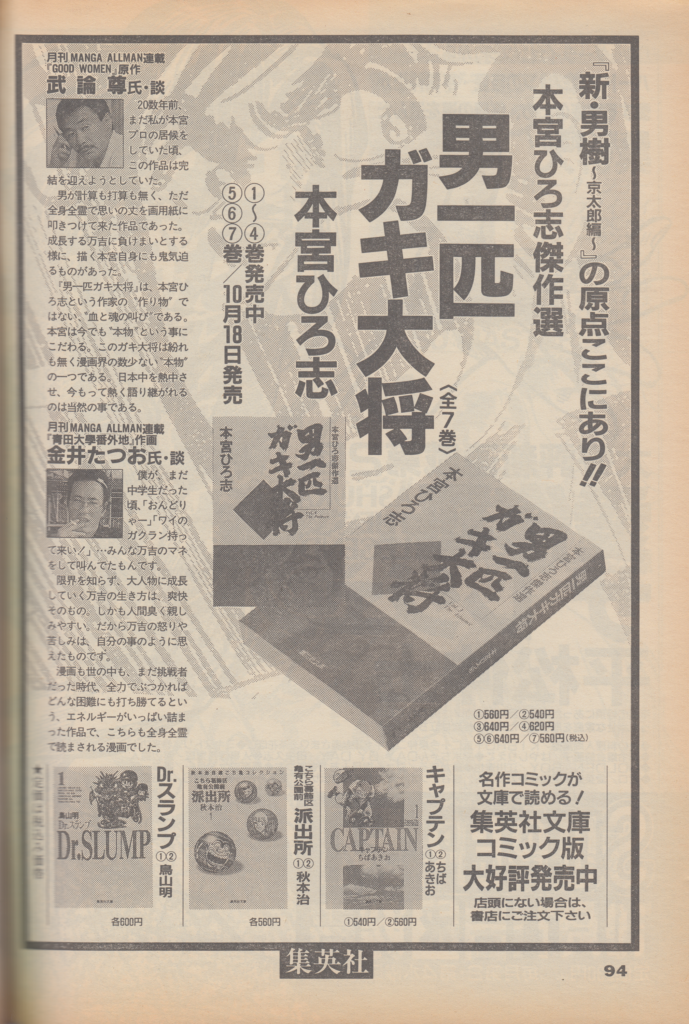
The comments are roughly translated into English below for each creator listed on the side of the ad.
Buronson’s comments:
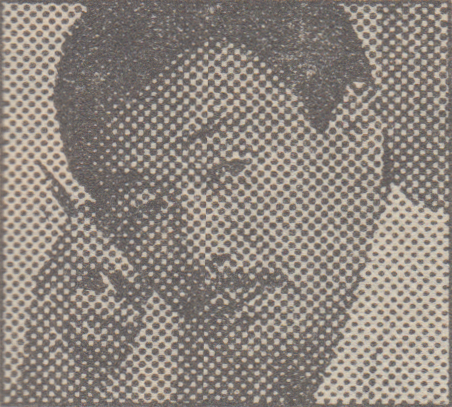
More than 20 years ago, I was still a freeloader at Motomiya Pro. The work was about to come to an end.
It was a work where he put his heart and soul directly into the paper without planning or calculations. Motomiya was also determined to not be outdone by Mankichi, who was growing up besides him.
“Otoko Ippiki Gaki Daisho” isn’t a “fictional story” by Hiroshi Motomiya, but really a “cry of blood and soul.” Motomiya is still instant that this is “real.” This brat general is without a doubt one of the most real characters in the manga world. It’s no wonder that this series has been so enthusiastically received throughout Japan and is still talked about with great passion to this day.
Buronson became friends while they were both enlisted in the Japan Air Self-Defense Force. He would then later be a freeloader, but effectively an assistant to Hiroshi Motomiya (which he referred to is as “Motomiya Pro” or “Motomiya Productions” in his comment). While he was working there, he got his pen name since the staff felt he was similar to the actor Charles Bronson after they watched the movie Adieu l’ami.
Tatsuo Kanai’s comments:
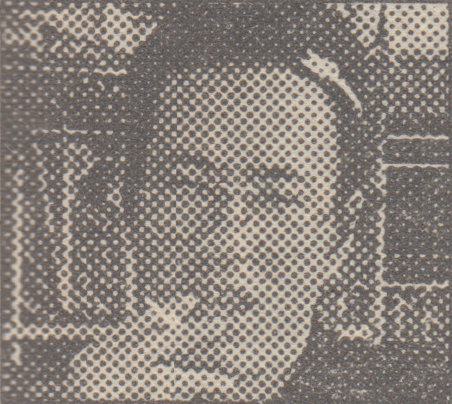
When I was still a Junior High School student, everyone used to imitate Mankichi and yell “Rooster” and “Get me my Gakuran”.
Mankichi had a way of life where there was no limits as he grew into a great leader, was not only exhilarating, but very human and relatable. You could feel Mankichi’s anger and sorrow as if it were your own.
In an age when both manga and the world was very challenging, this work was filled with a type of energy that could overcome any difficulty if you also put forth your best efforts and determination. It was a manga that made me want to read it with all of my might.
Later this year, we will have a series of articles that go further in-depth into the Manga Allman magazine and the series that it published. Please look forward to articles once our extremely comprehensive research has completed.


