

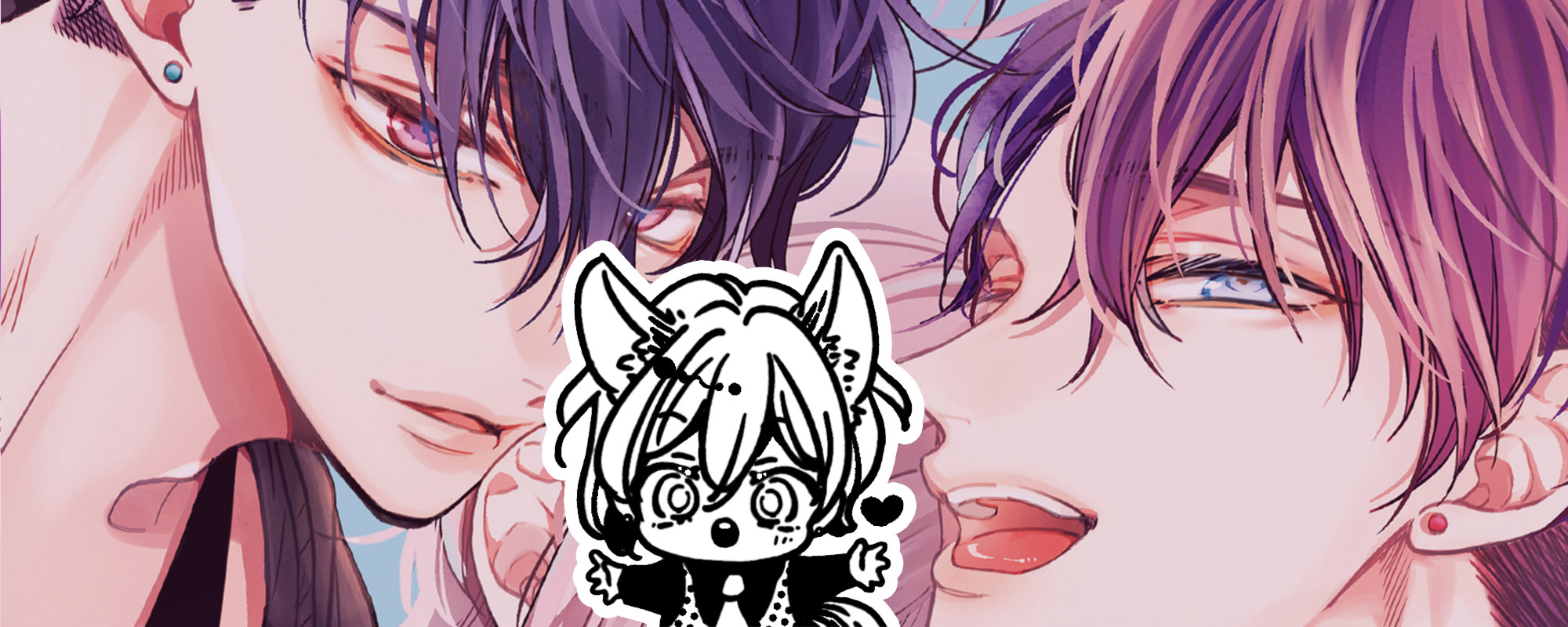
At the annual anime convention in Boston Massachusetts, “Anime Boston 2025” was held on May 23rd, 24th, and 25th at the Hynes Convention Center. In addition to their line-up of anime voice actors and musical guests, the mangaka Ryo Ayamine (あやみね稜緒) was one of the featured guests at the convention. This was her first US appearance at a convention and had a series of events during the 3-day weekend:
- Meet Ayamine-sensei: Behind The Feisty Omega and His Twin Mates (May 23, 4pm, Sheraton – Constitution A room)
- Ryo Ayamine Autographs (May 24, 3pm, Autograph room)
- BL Manga Making with Ayamine-sensei (May 24, 5pm, Hynes 207 room)
For the last event, we were able to attend in-person to be able to learn more about Ryo Ayamine’s process for creating a manga series. The panel room was smaller than the day before and was filled to capacity with around 200-300 attendees. At the request of the event hosts, no photography or video was allowed, so this report from the event is from handwritten notes. Additionally, a translator was present in the room, to provide live interpreting. There may be some amount of inaccuracies due to this, but the overall intention should be accurate for what was shown and discussed during the panel. Additional details about what was displayed on the screen have been added due to the lack of supplemental images for this article.
The event started off with some technical issues connecting the Wacom tablet to the laptop and screen projector for the room. A make-shift angle for the tablet was created by stacking some books, but it created an shaky connection and platform for drawing. Ayamine-sensei asked for some patience with her drawing as once she would start she will become very focused, especially with this unique setup. Once the connection was able to be established for the tablet, then the panel began in earnest, which was about 10 minutes later than their expected start time.
In addition to the panel host, the Japanese to English translator, and Ryo Ayamine, the 4th person on the panel was Chizu-san, Ayamine-sensei’s editor for The Feisty Omega and His Twin Mates (つよがりオメガは僕らの番) who works for the manga publisher Libre, Inc. (株式会社リブレ). Libre is the Japanese publisher of The Feisty Omega and His Twin Mates manga in Japan under the Be x Boy Omegaverse Comics (ビーボーイオメガバースコミックス) label. During the second half of the panel, she would be answering some of the audience questions as Ayamine-sensei was drawing.
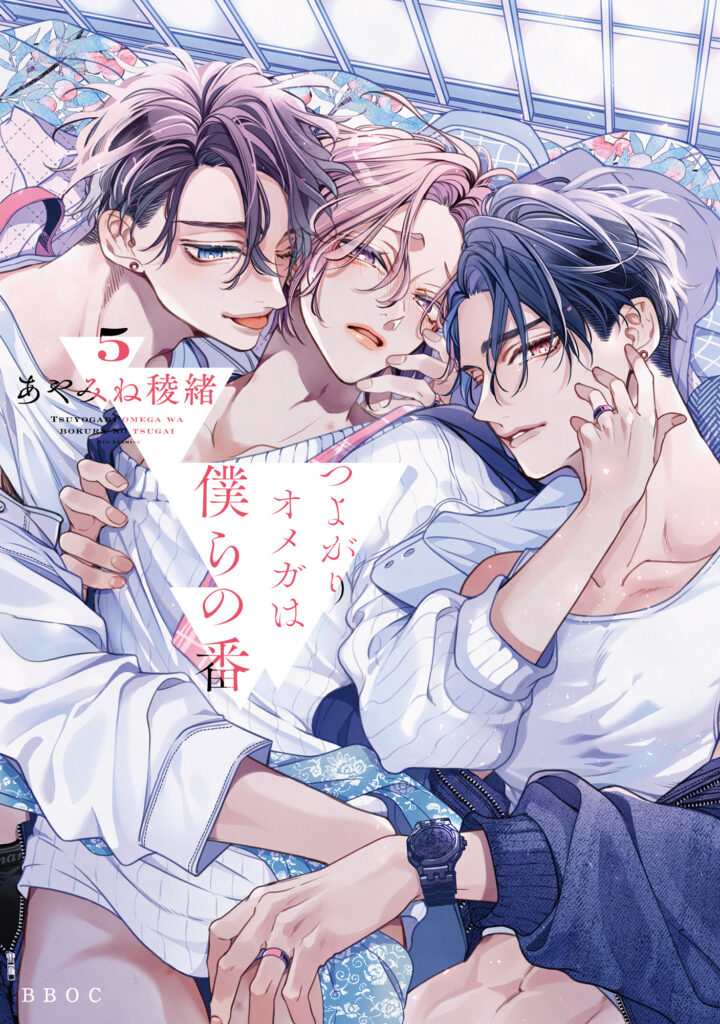
For the panel to show the process, Ayamine-sensei brought along some materials that she had worked on for 5th and most recent volume of The Feisty Omega and His Twin Mates. A sample of the 5th volume is available on the Japanese Be x Boy website. A document viewer camera was also setup on the stage so the fans could see the hand-created documents on the large screen.
The first topic brought up was determining the starting point for a new volume of manga. The Feisty Omega and His Twin Mates is not serialized in a manga magazine, but instead is created as a whole volume and published all at once. The publisher Libre allows the mangaka to publish what the author wants, so there isn’t a limitation on the content for the story. Ayamine-sensei commented that her first focus is looking at the world building, rather than specific plot events. She wants to establish the character motivations rather than a specific scene or outcome. From there, then she begins to hand write everything that will happen in the volume on what was described as the “plot paper.” This was a single A4 sized piece of paper roughly divided into section that cover aspects of the manga. A4 sized paper is 210 x 297 mm, or slightly larger than the standard US letter paper size. The left side of the paper was all of the key points that need to be drawn in the volume. The top was establishing the returning characters and motivations. The bottom of the plot paper was then for new characters and concepts being introduced in the volume. Some initial sketches of the new characters were also lightly penciled in as well. The goal is to have everything in view on a single sheet of paper. Ayamine-sensei found that if it was written onto more sheets of paper, then it the scope of the volume would become too expansive. So she ensures that she now writes very small on this paper to fill in the most important information. For volume 4 she noted that it was up to 3 sheets of A4 sized paper.
With this handwritten “plot paper” now completed, she then begins to transfer this information into a typed document to present to her editor, Chizu-san. This document helps map out the character relationships and provides more details on what will happen in each chapter within the volume. The first page of the document establishes those characters and their developments within the volume. Pages 2 and 3 of the document then go into details on what will occur in each chapter. There is about 4 chapters listed per page. Within these chapter descriptions, it is presented in a bullet-point formatted list. Chizu-san then reviews this document and makes suggestions to Ayamine-sensei. Once approved, then it moves into the next phase of storyboarding.
The first piece that is written is all of the character dialogue lines for the entire chapter. Then next to these written out lines are hand drawn “mini layouts” for each of the pages on paper. She purposefully draws these very small as she doesn’t want to break her tempo by drawing out too much details at this point. For these “mini layouts” she visualizes the characters in her mind for the general movements that she would draw. If she can’t visualize it in her mind, she would then change the layouts until she gets to a position where she could complete it all at once. With these “mini layouts” complete, then she now starts the process of digitally drawing the manga.
She uses the Clip Studio software as her only digital manga creation tool. Within the software she has templated out many of her common features for easy access. The first step is adding the text to the “Story Editor” feature in Clip Studio. Then she makes any adjustments to all of the non-hand-drawn text and places them into the layouts for the pages. Next she starts to do the rough sketches for the panel and character placement. Ayamine-sensei noted that she does a lot of trial and error with the placements here to find a design that she can visualize and quickly draw out the placement. Her template is scaled with A4 size sheets of paper, with 8 pages on a single document (2 rows of 4 pages). With this template, she then has 4 separate document files to match the 32 page chapters she has in the volume. Once she has completed her first draft of this, she exports this to a PDF and sends to her editor.
Chizu-san then takes this first draft and digitally adds her notes with red ink onto the pages. For parts that she likes, or she thinks the fans will really like, she draws little hearts next to it. Ayamine-sensei commented that she is very happy to see when she gets back the review from Chizu-san and see many hearts drawn in. During the panel they both commented about two of the specific corrections the editor had commented for a chapter. First was a line of text that was originally written like it was in a more detached, 3rd-person view. Chizu-san commented that the line needed to be reworded to be more personal for the character speaking. The second correction that was noted was also changing of the phrasing in Japanese. This was functioning as spell checking and general language review to ensure that wording for the story was correct. After a several back-and-forth with this editorial review process, then the actual drawing process for the manga by Ayamine-sensei takes place.
The pre-made custom templates and libraries within Clip Studio continue to play a key role in the creation of the manga. Additionally Ayamine-sensei notes that she is very particular on the layers within Clip Studio and the order they are stacked. She starts at the top-most layer and then works down to add layers underneath as part of her manga creation process. The speech bubble text and any hand-drawn sound effects are some of the top-most layers. By default she ensures that text is always in black with a white outline. These layers are then grouped into folders to more easily display and hide as needed. The line drawing is then the next layer down, followed by tones/shading, and then lastly the backgrounds. Copies of the storyboard draft are used a template for drawing.
With the prep in place, and only about 15 minutes left in the panel, Ayamine-sensei then begins to draw one of the panels from her volume. Her hands were shaking from the difficult Wacom table setup on the stage which she was apologizing for. As she was concentrated on the illustration process, Chizu-san helped answered from questions in-between the steps Ayamine-sensei was completing. Ayamine-sensei’s first steps were drawing the guidelines for the character shapes. She always starts with the outline, or edges of the characters first when placing them into the manga panels. She notes that she also keeps the drawings for the face, hair, and body on separate layers for each drawing. There are times when she will want to change the facial expression, and it is easier for her if they are separate. When drawing the face as part of the demonstration, she started with the nose and eyes before then working on the mouth, then collar, then hair. For the linework, she commented that a single page can take an hour or two. For the “feisty” scenes it can take longer.
After the linework is done, then she starts the inking process. This is filling in the space with either black ink, tones, or other shading techniques. Similar to the linework, she started with the nose, then moved to the right eye. Next was the left eye, then mouth, then the ear, the jawline, and then the neckline. She commented that this inking process can then take 2 to 4 hours per page as well.
Due to the time constraints of the panel being only an hour long, and the technical issues at the beginning, Ayamine-sensei had to pause with the inking process during the live drawing. So she quickly swapped to the pages that were created for the volume to show the different layers for the tones and shading for the audience. In particular was the focus with the character’s hair which was simplified for the live drawing. Then a quick sample of the backgrounds being added to show the near final page.
During this live drawing portion of the panel, Chizu-san was able to answer six questions from the audience that were randomly selected. The first question was about how does the manga publisher Libre determine who the target audience is. Chizu-san noted that in general they first look at the mangaka’s natural art style on how the characters are drawn. Character illustrations which have small faces are more favored by women in the 20s through 40s. If the character illustrations have larger faces or bodies, then they aim for a younger audience. By using that initial distinction, they use that for a general marketing, while they refine the specific topic the mangaka wants to draw.
The next question was related to revisions and what the criteria needed to mark it as complete. Chizu-san noted that it tends to be about 3 back-and-forth times with the revisions. The first review is the one where the most major changes occur. Then each subsequent revision should have fewer and fewer minor edits each time. This process continues until there are no more notes for the review.
The next question was related to keeping track of future plot elements in the story. Chizu-san reiterated that the story was being drawn with 6 chapters at a time for a single volume. So for keeping track of future developments for her is limited to just what is happening in that single volume. However, they do have phone calls with Ayamine-sensei to discuss general ideas on what could happen in the next volume. These general ideas would then be developed into the “plot paper” when the time for the next volume production to begin.
The topic was about how did Chizu-san become a BL manga editor was the next question. She commented that she always liked manga, regardless of the genre. It was her dream to be an editor, and it didn’t matter what type of story it was going to be. While neither Ayamine-sensei nor Chizu-san mentioned their ages or past employment during the panel, it’s worth noting that Chizu-san appeared to be quite young, so working for Libre may have been her first or an early editorial career position.
The last set of questions were related to how an editor keeps her vision of the story separate from the author and how do they receive and incorporate feedback into the future volumes. Chizu-san notes that an editor’s priorities should always be the readers first, and not their own opinions. That they should help provide input on what the fans would like to see, rather than what story decisions she would personally want to see. For the feedback, they look to the comments on Twitter (X) as well as fan letters sent into Ayamine-sensei after a volume is published.
With the panel running over their allotted time, a crowd game of “Janken” (Rock-Paper-Scissors) with Chizu-san occurred to give away 3 signed copies of the upcoming English edition of The Feisty Omega and His Twin Mates volume 1 to the fans. The panel host noted that Seven Seas had to pull some strings to be able to get those early copies available for this event, as the volume isn’t officially released until July 2025. The 3 winners would then collect the volumes after the panel concluded, as they were still holding up the Wacom drawing tablet Ayamine-sensei was drawing on for the panel.
For a closing remarks, Ayamine-sensei commented that this was the first time she had done something like this in public. She wasn’t sure if her explanations came across well on her manga creation process. Even through she was nervous, she said that once she was able to take hold of the pen then the fun can begin. She encouraged the fans in the audience to always draw what you want first. If you want your manga to be a commercial product, you’ll need to work with a publisher. But good publisher can see what your vision is and help you to draw what ever story you want to tell. She concluded with that you should never be embarrassed and thanks the fans for watching her process with kind-hearted eyes.
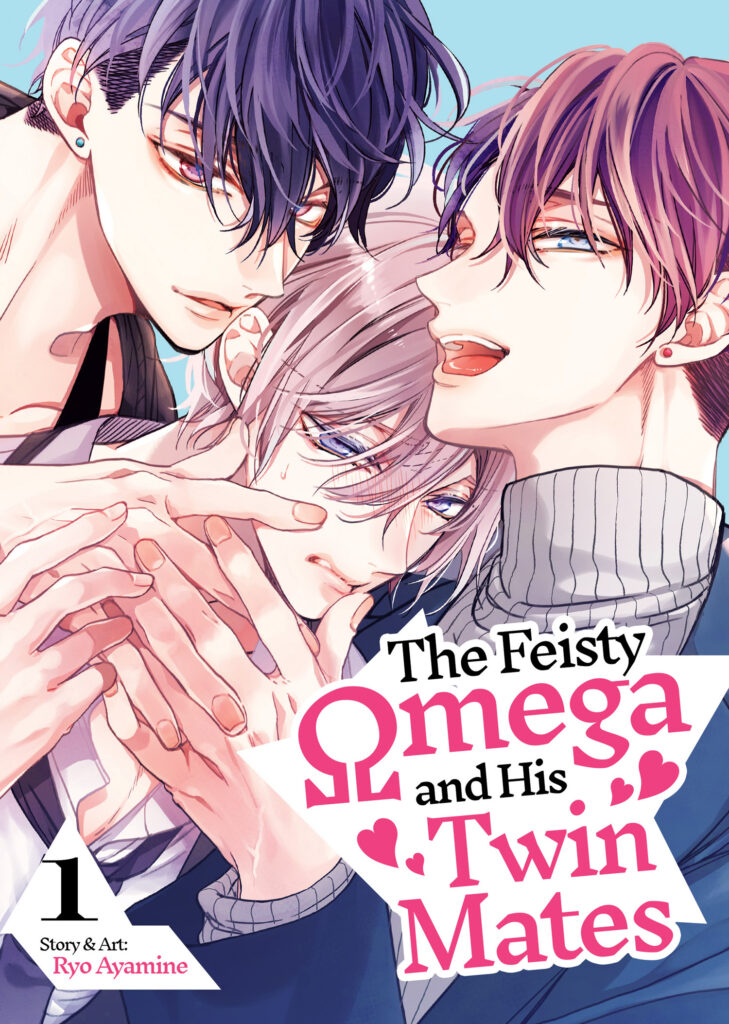
The Feisty Omega and His Twin Mates manga is currently on-going story being published in Japan with volume 5 releasing in both print and digital editions on April 10, 2025. The first volume of the manga will be published in English on July 8, 2025 in both print and digital editions from Seven Seas. Volume 2 will release in October 21, 2025. The first volume plot synopsis is listed as the following:
Takahina Natsuo is an omega who has lived a life pretending to be a beta to protect himself from the predatory alphas around him. Despite his precautions, Natsuo suddenly goes into heat on his way to a job interview and is nearly attacked! Thankfully, a pair of elite alpha twins, Yuya and Tomoya, manage to save him in the nick of time. However, instead of feeling at ease, Natsuo can’t resist the intense attraction he feels around these two brothers–which means that he’s found his fated mate! Problem is…which one of them is it?!
A sexy BL omegaverse romp where a reluctant omega learns that two lovers are better than one!
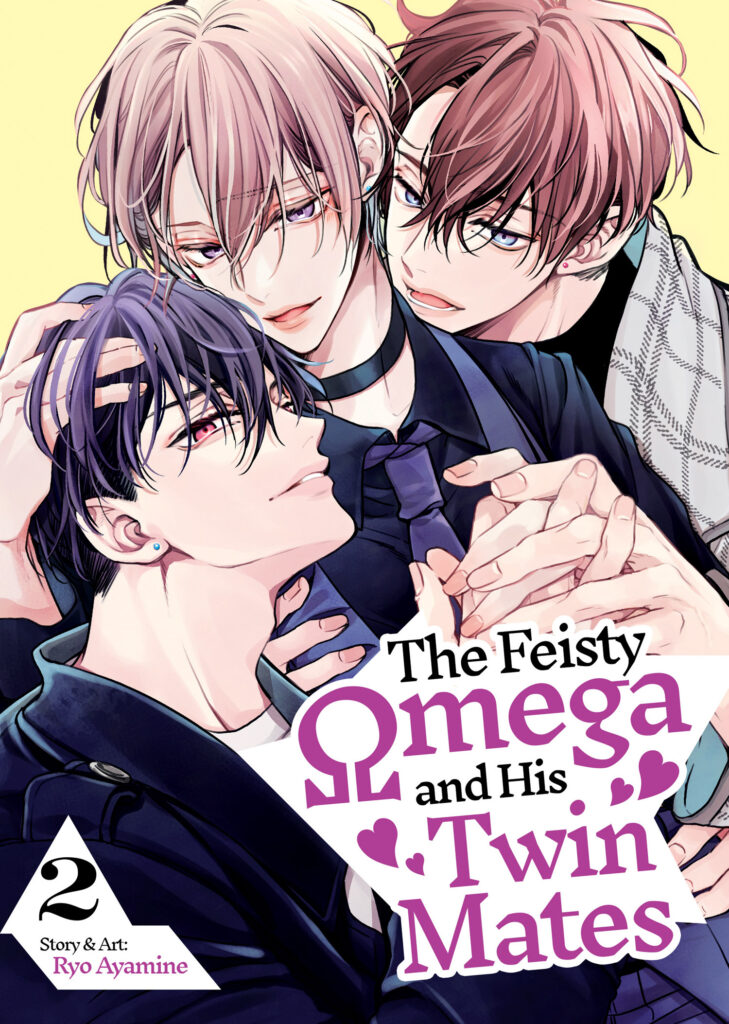
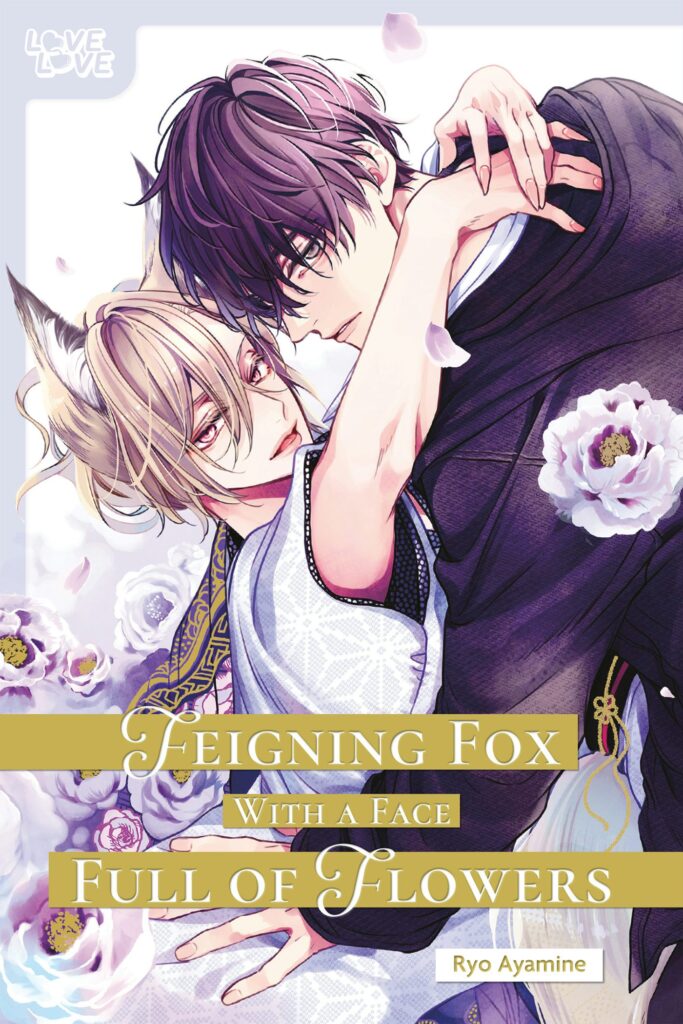
This was not Ryo Ayamine’s first published work in English. In August 2023, the manga Feigning Fox with a Face Full of Flowers was licensed by Shu-Cream BL for a digital English release. Earlier this year this volume received a new print and digital edition published by Tokyopop under their LoveLove imprint on March 11, 2025.
From both Ryo Ayamine’s and the Be x Boy Omegaverse Comics Twitter (X) feeds they have thanked the fans who attended Anime Boston. Earlier today (May 27, 2025), she safely returned to Japan (photo from JFK airport in New York City). She commented that the event, the people, and the city of Boston were all absolutely wonderful and that she would like to return in the future.